

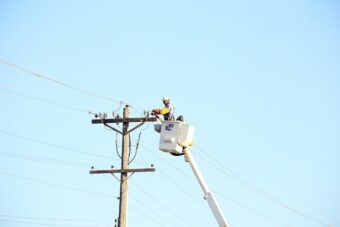
 You probably don’t think about them until your power goes out, but electric lineworkers protect your homes and communities, 24 hours a day, 365 days a year. Like other first responders who keep us safe, lineworkers endure all kinds of weather and challenging conditions.
On April 14, we celebrate Lineworker Appreciation Day to honor the men and women who power our lives. Here are some fast facts about lineworkers and the work they do.
Lineworkers first appeared during the 1840s rush to spread telegraph service across the U.S., stringing wires between trees and other natural objects. It didn’t take long for everyone to realize tall poles were safer and more practical.
Restoring electricity after a power outage is just 1 of the many duties of lineworkers. They also:
Lineworkers are responsible for maintaining and upgrading the nation’s electric grid, which connects more than 7,300 power plants to 145 million consumers through 60,000 miles of high-voltage lines, millions of miles of distribution lines, and more than 50 million transformers.
Lineworkers climb with up to 40 pounds of safety gear and tools. That’s like carrying a 5-gallon water jug! Here’s what they typically wear to stay safe while working:
1 essential tool for lineworkers is the hot stick, an insulated fiberglass pole used to safely move energized wire and other equipment. Hot sticks vary in size depending on the job.
Described by the Energy Department as 1 of the nation’s highest-paid professions that doesn’t demand postsecondary education, becoming a journeyman lineworker typically requires a high school diploma or equivalent, training, and a paid apprenticeship, which typically spans 4 years. Apprentice lineworkers receive hands-on training and experience in the field before advancing to “journeyman” status. Lineworker salaries range from $40,000 to $144,000, depending on location, skill set, and experience.
Roughly 60,000 lineworkers hit the road annually to respond to devastating storms and the damage they leave behind. In addition to extreme weather exposure, lineworkers face a variety of dangers, including electric shock, falls from elevated work locations, and roadside traffic accidents.
Safety is always the number 1 priority, which is why lineworkers continuously receive training to stay mindful of safety requirements and up to date on the latest equipment and procedures.
Lineworkers power our lives. If you get a chance, remember to thank lineworkers for the essential work they do.